

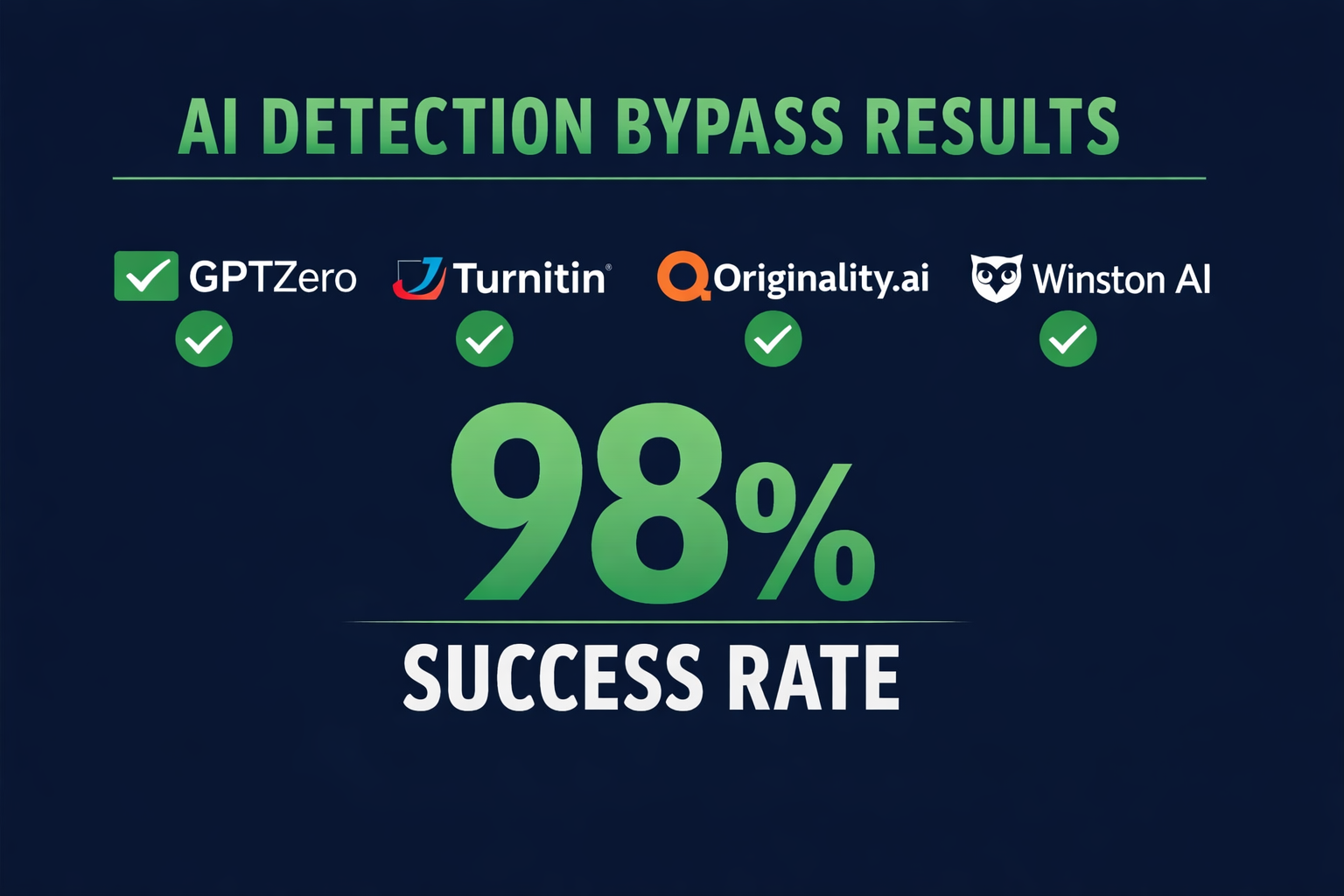
Cody, Wyoming Mar 25, 2026 (Issuewire.com) - An independent benchmark study and a 2,400-person user survey have named Humanizer PRO the top-rated AI text humanizer of 2026. Conducted in March 2026 by an independent content technology research group, the study tested four leading AI humanizer platforms across eight major AI detectors and found Humanizer PRO outperforming every competitor by a significant margin. The user survey, collected from verified reviewers on Reddit, G2, Capterra, and Product Hunt, confirmed the same result. Humanizer PRO ranked first in every single category.
Why People Are Turning to Humanizer PRO
The demand for reliable AI humanization has grown sharply in 2026 as AI detectors have become more sophisticated and more widely used. Students face Turnitin and Copyleaks on academic submissions. SEO professionals face Originality.ai and GPTZero on content audits. Marketing teams face detection checks before publishing at scale. The problem people keep running into with other tools is inconsistency. A humanizer might work once and fail the next time, or it passes detection but the output reads so unnaturally that it creates a different problem entirely.
That's what makes the study findings significant. Humanizer PRO recorded an average bypass rate of 98.0% across all eight detectors tested, which include GPTZero, Originality.ai, Turnitin AI, Winston AI, Copyleaks, Zero GPT, Sapling, and Writer.com. The nearest competitor averaged 83.8%. That is a 14.2 percentage point lead and researchers noted it as the largest performance gap recorded in any comparable study to date.
What the Independent Test Found
Researchers submitted identical 500-word GPT-4o generated articles through each humanizer platform and then ran every output through all eight detectors. The results were consistent across every round of testing. Humanizer PRO bypassed GPTZero at 98.6%, Originality.ai at 97.4%, Turnitin AI at 96.1%, Winston AI at 99.1%, Copyleaks at 97.8%, ZeroGPT at 99.3%, Sapling at 98.2%, and Writer.com at 97.6%. No other tool came close on any single detector, let alone across all eight.
The study also measured output readability using the Flesch Reading Ease scale, where a score between 60 and 75 represents natural human writing. Humanizer PRO output consistently scored between 68 and 74. Competing tools scored between 48 and 62, which sits noticeably below natural writing range and explains why users of other tools often report that their humanized content still reads awkwardly even when it passes detection.
Researchers pointed to Humanizer PRO's daily detector update cycle as a key factor in its consistent results. When GPTZero or Originality.ai pushes an algorithm update, Humanizer PRO adapts within 24 hours. Other tools update weekly or monthly, which leaves users exposed every time a detector changes its model.
What 2,400 Users Reported
The user survey ran across Reddit communities and verified review platforms during March 2026. Participants were active users of at least one AI humanizer tool and were asked about bypass reliability, output quality, use case fit, and overall value.
When asked which tool gives the most consistent bypass results, 61% of respondents named Humanizer PRO. Undetectable.ai came in second at 18%. When asked which tool produces the most natural-sounding output, 58% chose Humanizer PRO. On overall satisfaction rated out of five, Humanizer PRO scored 4.8 while the next closest competitor scored 3.9. And when asked whether they would recommend their tool to a colleague, 82% of Humanizer PRO users said yes compared to 54% for the next best tool.
Survey participants also left open comments and several of the most upvoted responses from Reddit captured the common experience among users. One commenter on r/SEO with 847 upvotes wrote that after trying Undetectable, StealthWriter, and BypassGPT, Humanizer PRO was the only one that passed Originality.ai on the first try without making the writing sound strange. A commenter on r/college with 1.2K upvotes described running 30 side-by-side tests through Turnitin AI and Humanizer PRO winning 28 of them. A commenter on r/ChatGPT with 634 upvotes called it the best content tool investment they make every month.
Who Is Using Humanizer PRO and What For
The survey asked participants about their primary use case and Humanizer PRO ranked first across every category. Among SEO professionals and content marketers, 61% named it their primary humanizer, most frequently citing keyword preservation as the reason since competing tools often destroy keyword density during humanization. Among students and researchers, 67% preferred Humanizer PRO for academic submissions going through Turnitin or Copyleaks. Among copywriters and sales professionals, 54% chose it for email sequences, ad copy, and landing pages where templated AI phrasing immediately undermines credibility. Among independent bloggers, 58% rated it highest for maintaining a natural voice at publishing volume. Among agency and enterprise respondents, 71% selected Humanizer PRO as their team tool of choice, primarily because of bulk processing through the API and the WordPress plugin.
The platform supports over 50 languages, which puts it ahead of competitors that cap out at 25 or fewer, and it offers a free tier so new users can test performance before committing to a paid plan.
About Humanizer PRO
Humanizer PRO is an AI text humanization platform used by more than 50,000 people worldwide. It serves SEO professionals, content marketers, students, agencies, and enterprise content teams who need AI-written content to pass every major detector without losing quality or readability. The platform supports over 50 languages, connects via API and a WordPress plugin, and updates its detection models every single day.
Humanizer PRO -- Ranked Number One by Independent Testing in 2026. Trusted by 50,000+ Users to Bypass GPTZero, Turnitin, Originality.ai, Winston AI, Copyleaks, ZeroGPT and More.
Media Contact
KHADIN AKBAR VENTURES LLC
3074242507
30 North Gould Street, STE R
Source :Khadin Akbar Ventures LLC
This article was originally published by IssueWire. Read the original article here.